

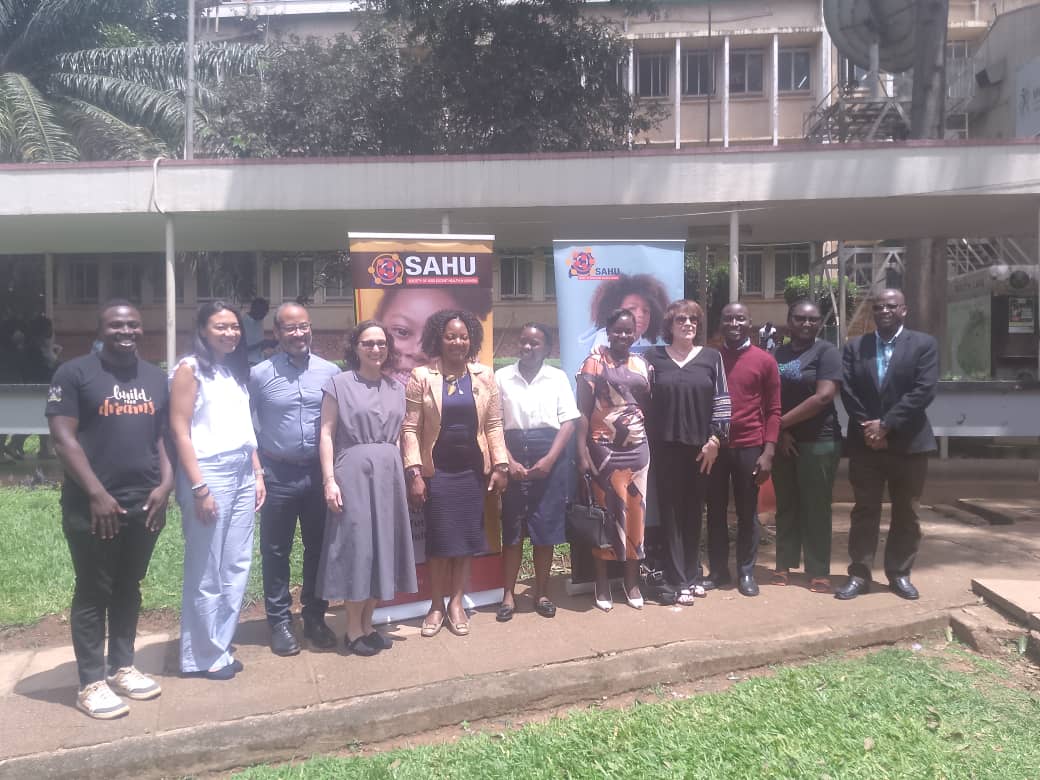
Health experts, researchers, and academics have called for stronger collaborations to advance adolescent health in Uganda.
The calls were made on Monday at Makerere College of Health Sciences as adolescent health experts convened for a press conference ahead of the 11th Annual Adolescent Health Conference, scheduled for November 11–12 at Golden Tulip Hotel in Kampala.
The two-day conference brings together experts from Uganda, across Africa, and beyond, including speakers from the United States, Mauritius, Nigeria, and Botswana.
Held under the theme, “Adolescent Health: Fostering Wellness Through Collaborations,” the event aims to share best practices, celebrate milestones, and chart new strategies for promoting the health and wellbeing of young people.
Delivering her remarks, Dr Sabrina Kitaka, a physician, paediatrician, and infectious disease specialist at Makerere University, emphasized the importance of such gatherings in shaping the future of adolescent health.
“So I'll talk about the repeated conferences that we are having. Are they making a change? Do they even matter? I think conferences are so important because one, they improve our scientific knowledge but also collaborations and networking,” Dr Kitaka said.
She applauded the milestone of hosting the 11th edition, highlighting the effort, planning, and international participation that reflects Uganda’s commitment to adolescent health.
Dr Kitaka added that the conference goes beyond celebration.
“We would like to concretize things that we know work and identify areas for improvement. We also need to hold ourselves accountable.” Recommendations from the conference will be submitted to the Ministry of Health, Makerere University, and the Department of Paediatrics.
She also stressed the importance of addressing both girls’ and boys’ needs equally.
“As we take care of the girl child more and more, we are leaving out the boys who are going to marry these girls. Let us leave no child behind,” she said.
Dr. David Bell, Professor at Columbia University and former president of the Society of Adolescent Health and Medicine (USA), echoed the need for inclusivity and global knowledge-sharing.
“Change is not easy and the conferences really are about collaboration, increasing our knowledge, and understanding what works in one place that could work in another,” he said.
He further emphasized the importance of adolescent boys, noting that historically, adolescent medicine has largely focused on females.
Dr Dina Romo, Assistant Professor at Columbia University, highlighted the success of school-based health programs in the United States in managing chronic illnesses such as obesity.
She emphasized a multi-faceted approach, involving parents, families, and schools, and noted the importance of peer involvement.
“We use students themselves to disseminate messages because they hear best from their friends,” she said.
Dr Romo also stressed the need to address mental health challenges among adolescents.
Dr Joseph Rujumba, Senior Lecturer in the Department of Paediatrics and Child Health at Makerere University, underscored the importance of inter-sectoral collaboration.
“We started the Adolescent Clinic in 2013. It is growing and the numbers keep growing. We have paediatricians, psychologists, social workers—but we don’t do that work alone. We need to reach out to the parents,” he said.
He highlighted how sectors like transport and education intersect with adolescent health, noting road traffic accidents as a leading risk to young people.
Concluding, Dr Rujumba said, “We can only guarantee adolescent health and support young people to grow into productive adults if we bring our efforts together.”
As Uganda hosts the 11th Annual Adolescent Health Conference, experts agree that teamwork, innovation, and commitment will be critical to advancing adolescent wellbeing.
In Dr Kitaka’s words, “A child is brought up by the whole village. For us, this is our village. This is our tribe. And we want that our tribe grows so that we influence more and more people to understand that adolescents are a special and unique group.”
